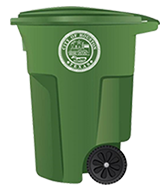
Curbside recycling began as a pilot program in 1990 with 27,000 participating homes using the bin method of recycling. Homes received service on a weekly basis. In addition to these original 27,000 homes, 19,000 more homes had the opportunity to recycle through the "blue bag" approach implemented by Browning-Ferris, Inc.
After comparing the advantages and disadvantages of both curbside methods, the city of Houston chose the bin method. Therefore, in 1991, the city of Houston took over these 19,000 homes. All have been converted to the green bin collection method.
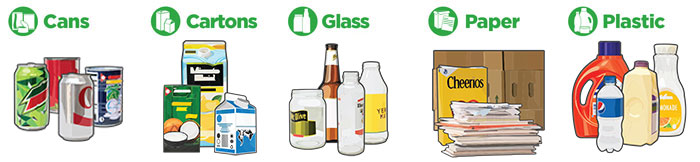
Curbside recycling requires residents to place newspaper, magazines, telephone books, aluminum and tin cans, advertising mail, corrugated cardboard, plastic soft drink, milk and water containers, together in the same bin. Each bin holds 18 gallons of recycling material and is itself made out of 25% recycled plastic and 75% virgin material. Used oil is also collected and is placed next to the bin in clean containers with screw-on tops.
Curbside recycling was changed from a weekly to a biweekly service to reduce the number of trips into the neighborhoods, thereby reducing fuel consumption and emissions. Biweekly service is also more cost-efficient for the department by ensuring the bins are full on collection day.
Subdivision chairpersons act as liaison between the community and the recycling division. Recycling information also is presented by the recycling staff through presentations at civic club meetings, area schools and trade shows. Additionally, the recycling staff distributes brochures and handbooks.
Yard Trimmings Recycling The City of Houston Yard Trimmings Recycling Program began as a pilot program in 1993. Due to the expansion of automated garbage collection, workers who were displaced by the automated garbage collection program were transferred to the recycling division's once-per-week yard trimmings collection service.
This separate yard trimmings collection service is being offered to all citizens who receive the automated garbage collection service. Yard trimmings make up approximately 30% of the total residential waste stream in Houston. Recycling yard trimmings will save the city in landfill costs and extend the life of landfills.
Guidelines for Yard Trimmings Recycling
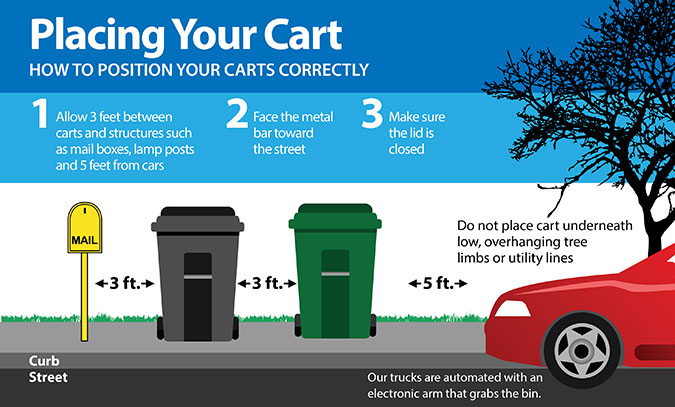
Grass clippings, small branches, and leaves must not be placed in the automated garbage cans. They must be put in sturdy one-way containers (bags), not weighing more than 50 pounds, and placed at the curb 3 feet away from the automated container for separate yard trimming collection.
Small branches may be put in bundles as long as each bundle is less than 4 feet in length, 18 inches in diameter, and not weighing more than 50 pounds.
Yard trimmings mixed with paper, plastic or any other type of waste will not be collected.
Go Green Houston
"Recycling is the environmentally right thing to do. It saves landfill space, saves tax payer dollars, and helps conserve natural resources. Yet, prior to the launch of the Go Green Houston recycling awareness campaign, neighborhood participation rates averaged 20%," said former Mayor Bill White (in 2006). To encourage participation a competition was launched in 2006 with $5,000 incentives for the most improved paper recycling area, highest overall paper recycling area, most improved commingled area and highest overall commingled area. Since the initial survey in 2006, the City has taken more surveys to determine participation rates. Neighborhoods that do not meet a minimum participation rate may lose the curbside recycling program in the area at the end of the year..
BOPA - Batteries, Oil, Paint and Antifreeze
Through a grant from the Houston-Galveston Area Council of Governments, the Recycling Division has begun a "BOPA" program at the Consumer Recycling Center located at 5900 Westpark. The City of Houston now accepts "B"atteries, "O"il, "P"aint and "A"ntifreeze for recycling at the Center. The batteries accepted are car-type batteries (lead-acid); used oil up to 5 gallons and oil filters; latex paint only (sorry, no oil-based) up to ten 1-gallon cans and one 5-gallon can; and antifreeze up to 5 gallons. The latex paint accepted at the Center is recycled and used in the City's ongoing graffiti abatement program. Additionally, the Center accepts up to 10 tires for disposal, making the Center a "one-stop-shop" for all do-it-yourself mechanics.
Household Hazardous Waste Collection
Since 1992 the Department of Solid Waste Management, first with the Department of Health and Human Services and now on its own, has provided a way for citizens to dispose of their household hazardous waste. This waste includes such products as old paint, pesticides, cleaners and solvents. In the past the City did this by providing days when citizens could bring this waste to a site where the material would be collected for disposal or recycling. Now, through a grant from the Houston-Galveston Area Council of Governments and the Texas Natural Resource Conservation Commission, the City has established a permanent collections facility that is open weekly. This facility is the Environmental Service Center (South and North).
Volunteers are available at the Westpark Consumer Recycling Center and the Environmental Service Center drop-off sites to assist residents who bring their recyclables to these locations. Ellington Field, Kingwood, Center Street and the Vista Fiber sites accept all recyclables collected in the curbside recycling program, with the exception of used motor oil. Glass bottles and jars are also accepted at these sites. Used motor oil is accepted at the four depository sites.
Used Oil In 1992, Houston became the first major city in the country to establish a curbside used motor oil recycling program. The city currently provides curbside collection of used motor oil to 162,000 homes by using recycling trucks that have been retrofitted with used oil collection racks.
A 1,000-gallon used oil storage tank was placed at the city's recycling processing center. Brochures explaining the program have been delivered to every participating household, and free one-gallon jugs were made available to all interested participants. Used oil and oil filters are also collected at the Westpark Consumer Recycling Center and the previously mentioned Department of Solid Waste Management Depositories.
Christmas Tree Recycling
The Christmas Tree Recycling Program began in 1991 as a joint effort between the Department of Solid Waste Management and the Parks and Recreation Department.
During the holiday season there are numerous drop-off sites located around the city.
The trees are chipped and converted into mulch products for sale back to the public.
Electronic Scrap Recycling
Residential electronic scrap items accepted by the City of Houston are monitors, televisions, printers, keyboards, mice, scanners, fax machines, telephone handsets, VCRs, CPUs, cellular phones without batteries and other small consumer electronics. There is a (5) piece maximum amount of electronic scrap per vehicle.
Computers and related components contain hazardous materials that can leach into a community's water supply. Cathode ray tubes (CRTs), circuit boards, batteries, and mercury switches contain hazardous materials, such as lead, mercury, cadmium and chromium.
Electronic scrap items can be dropped off at the Westpark Consumer Recycling Center or the Environmental Service Center (South and North).